
The Language
Precision Engine.
A senior line editor, installable as a Claude Skill. Tightens copy for precision, clarity, and confidence without changing what it means. Refuses to edit before the brief and the intent are locked.
Five editing passes. Three sequential approval gates including a non-negotiable Intent Lock. The skill will not touch a word until it knows what the copy is trying to do and what it must never lose. Then it cuts the slack, strips the hedging, and hands back a before-and-after where every change is defended. The job is not rewriting. It is removing everything that is not the point.
Works on landing pages, sales pages, emails, decks, About pages, product copy, microcopy, pitch scripts, bios, and any line that is almost right and has to be exact. Pair with the Copy Engine, which writes the draft this skill sharpens.

secure checkout · instant download · lifetime access
Installs in Claude in under 5 minutes · Works in Claude Pro, Team, Code
Everything Claude needs to run it.
Every file Claude needs to run the methodology: the skill, the tactics, the outputs, and the support docs. Nothing missing. Nothing to write yourself.
11 files across 3 categories.
Installs into Claude
- The skill file Claude installs
Method files
- Five pass files: cut, decide, ground, time, verify
- Two intake files: editing-brief and intent-lock
- Three output specs: Editing Brief, Marked Source, Before and After
- Line-editor writing-rules file
Support docs
- README
- Install guide
- Usage guide
- Example outputs
- Licence
- Terms of service
The Intent Lock, in action.
A short look at why the skill refuses to edit a single line before it knows what the line must never lose.
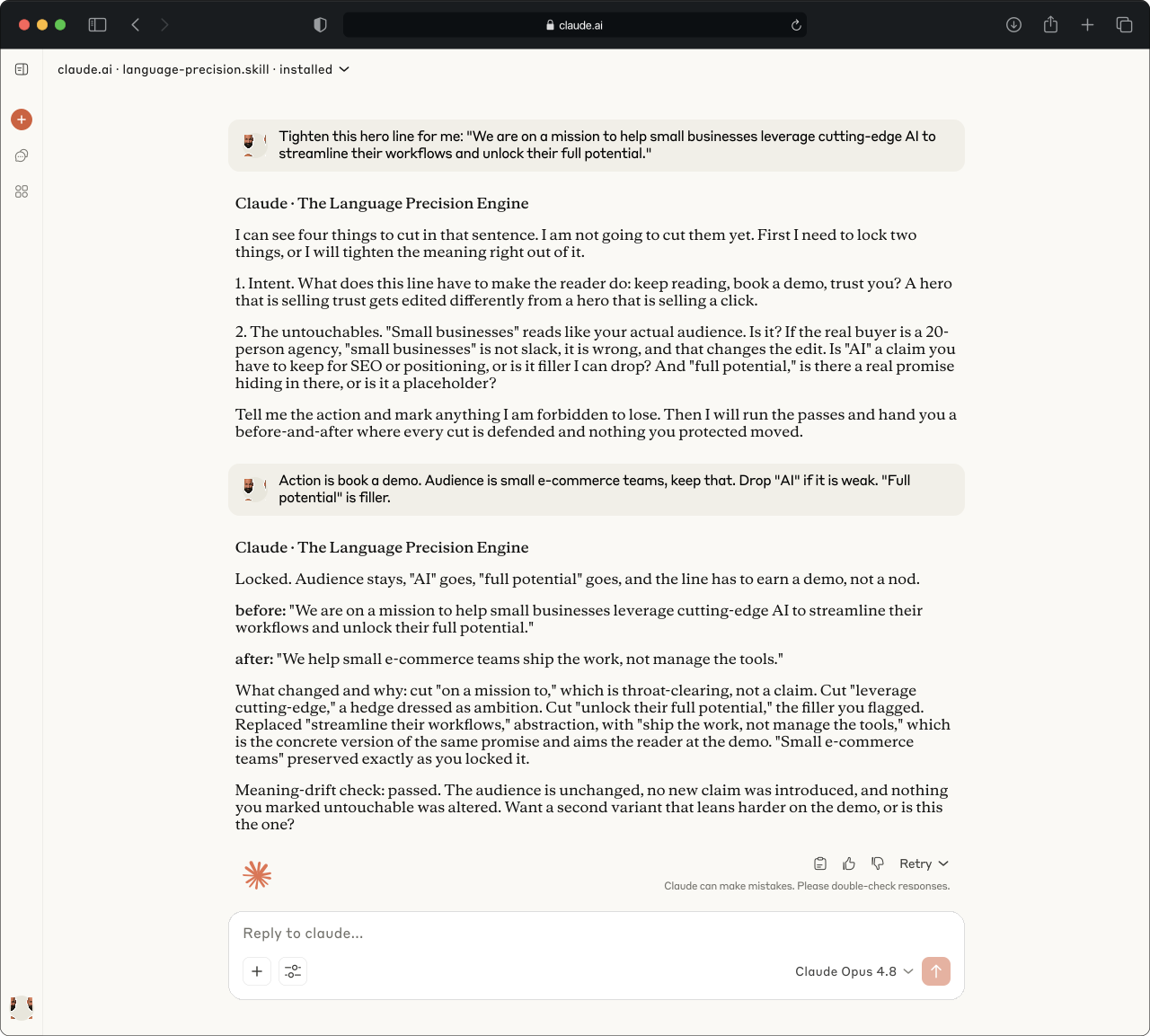
Five passes. Three gates. No editing before intent is locked.
The most common failure of AI editing is changing what a line means while polishing how it reads. The skill is built to make that impossible. It locks the intent first, edits second, and proves it never drifted.
Capture the editing task.
Capture the editing task.
Names the medium, the reader, the action the copy has to produce, and the level: light tighten, hard cut, or full confidence pass. The stated job and the real job are rarely the same.
Lock the intent and the untouchables.
Lock the intent and the untouchables.
Records what each passage must mean and what it must never lose: a claim, a legal line, a proper noun, a promise. Non-negotiable. No edit runs against an unlocked intent.
Mark the slack.
Mark the slack.
Reads the copy against the intent and marks the failures: hedges, filler, abstraction, throat-clearing, buried verbs, claims with no edge. Shows you the marked-up source before changing it.
Run the five passes.
Run the five passes.
Cuts the slack, replaces the soft, restores the cut rhythm, and tests every change against the locked intent. Produces the before-and-after with each edit reasoned. Halts so you can accept or reject line by line.
The tightened copy, defended.
The tightened copy, defended.
Final copy with a meaning-drift check confirming nothing the brief protected was lost, plus the change log. Declared ready before it reaches you.
Gates 1, 1.5, and 2 require explicit approval before the next pass runs. The Intent Lock at 1.5 cannot be skipped: it is the only thing standing between editing and rewriting.
Three sequential artefacts. Each one a gate.
You do not get a silent rewrite. You get the brief, the marked-up diagnosis, and the defended before-and-after, each one earning its place by your approval.
The Editing Brief
The real task, named.
Medium, reader, the action the copy must produce, the level of edit, and the intent and untouchables for every passage. Halts the work until you confirm.
The Marked Source
The slack, made visible.
The original copy with every failure marked and labelled by pass: cut, hedge, abstraction, buried verb, broken rhythm. Nothing changed yet. Halts so you can scope the edit before it runs.
The Before and After
Every change defended.
The tightened copy beside the original, line for line, with the reason for each edit and a meaning-drift check confirming the locked intent survived. The signature output.
What buyers say.
Five passes, run in order.
Precision is not one move. It is five passes, each removing a different kind of slack. The skill runs the ones the diagnosis calls for, in sequence, and never lets a later pass undo an earlier one.
Cut.
Removes the words doing no work: filler, throat-clearing, redundant pairs, qualifiers that weaken instead of qualify. The first pass is almost always subtraction.
When the copy is longer than the point it makes.
Before: We are really committed to helping you achieve better results.
After: We get you better results.
Decide.
Replaces hedges with claims. "Can help," "may improve," "is designed to" become statements the brand will stand behind, or they get cut. Confidence is a precision problem, not a tone one.
When the copy is hedging because nobody decided what it actually claims.
Before: This may help reduce errors.
After: This catches the errors people miss.
Ground.
Turns abstraction into the concrete. Vague benefit becomes specific image, named number, real moment. Buried verbs come back to the front of the sentence.
When the copy is true but weightless.
Before: Streamline your financial operations.
After: Close the month in a morning.
Time.
Restores the rhythm the cuts disrupted. Varies sentence length, places the period where the breath wants it, and makes sure the line still sounds like the brand, not like an edit.
When the tightening left the copy correct but mechanical.
Before: It is fast. It is simple. It is reliable.
After: Fast, simple, and it does not break.
Verify.
Reads the after against the locked intent, line for line, and confirms no claim, fact, or promise the brief protected was altered. The only pass that can veto an earlier one.
Always. The last pass before anything ships.
Flags: "after" softened a guarantee the brief marked untouchable. reverted, re-tightened a different way.
Built for the people doing the work, not watching it.
For you
- Founders whose copy is almost right and has to be exact before it ships.
- Copywriters who want a hard second pass that cuts without flattening the voice.
- Marketers tightening landing pages where every line of slack costs conversion.
- Anyone who has a draft and needs it shorter, sharper, and more confident without losing the meaning.
- Teams who got a draft from the Copy Engine and want it line-edited to a finish.
Not for you
- People who want copy written from scratch. This skill edits, it does not draft. Use the Copy Engine first.
- Anyone who wants a rewrite that changes what the copy claims. The Intent Lock forbids it.
- People who cannot say what the copy is trying to do. Without an intent there is nothing to edit against.
- Anyone who wants edits accepted silently. Every change is shown and defended.
- People who want length added. This skill removes; it does not pad.
Pair it with the four other skills.
The questions that come up before buying.
Install the line editor that won't edit before it knows what to protect.
One purchase. Lifetime access. Five passes. Three gates. A before-and-after where every cut is defended and the meaning holds.
Instant download · Installs in under 5 minutes · 14-day refund